
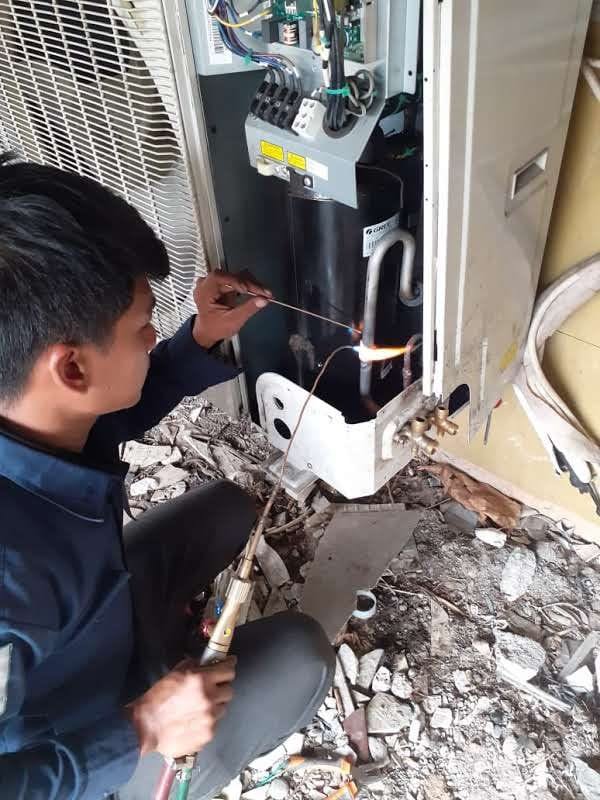
A refrigeration system — split AC, chiller, or cold store alike — is sealed. Refrigerant circulates inside without being consumed, unlike fuel. So if the quantity has dropped, it left through somewhere. The condition is not "low"; it is "leaking".
Why topping up appears to work
Adding refrigerant does restore performance temporarily. Pressure returns to normal, the room cools again, and the complaint stops. Months later the same complaint returns, more is added, and the cycle repeats. The cost of repeated recharging often ends up exceeding the cost of finding and sealing the leak once.
What else suffers
- The compressor runs in abnormal conditions when refrigerant is low, so motor cooling drops and its temperature rises.
- Power consumption climbs because the unit runs longer for the same result.
- Refrigerant released into the atmosphere is a greenhouse gas; some types have warming impact far above carbon dioxide.
What should come first
Leak testing belongs before charging, not after. Methods vary: electronic detection, soap solution on joints, or dye that shows at the leak point. The spots that most often fail are flare connections, brazed joints, and areas subject to prolonged vibration.
Once the leak is sealed, the system is evacuated to remove air and moisture, and only then charged to the quantity stated on the unit nameplate. Charging without evacuation leaves moisture inside, and moisture is where acid formation — which attacks the system from within — begins.
In short
If a technician offers to top up the refrigerant without checking for leaks, the question is worth asking: where is it leaking? The answer to that determines whether this complaint is finished, or back again in a few months.