
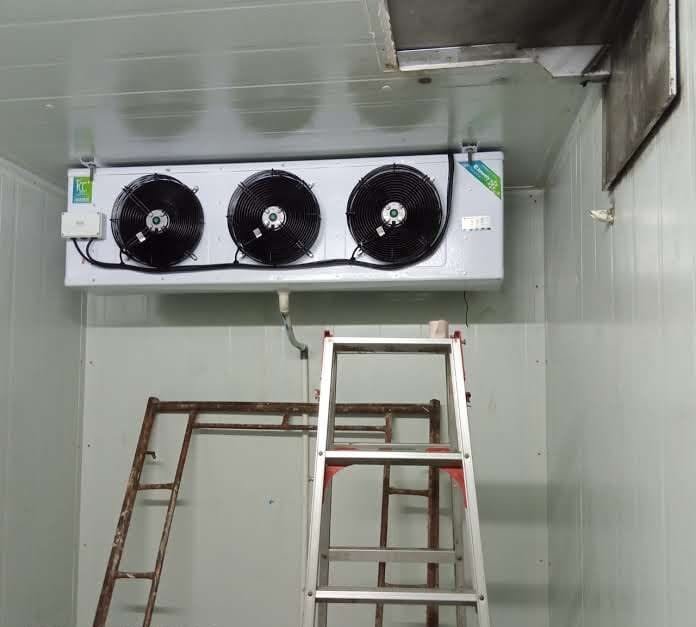
An evaporator works by absorbing heat from the room air. For that to happen, air has to reach the coil surface. When the coil is covered by thick ice, the air no longer touches metal but ice — and ice is a fairly effective insulator.
Why ice accumulates
- Moisture entering through doors opened frequently or no longer sealing.
- Door gaskets gone hard and cracked, letting outside air seep in continuously.
- A defrost system not running: failed heater, faulty timer, or cycles set too far apart.
- Warm or wet product loaded straight in without being pre-chilled.
The knock-on effects that go unnoticed
As ice reduces cooling capacity, room temperature rises. The controller reads a setpoint not yet reached and lets the compressor run longer — often almost continuously. Power consumption climbs while temperature still fails to arrive. From outside, the symptom looks like "the machine is undersized", when the problem is on the coil surface.
The more serious risk falls on the compressor. An iced-over evaporator does not boil off refrigerant as it should, so liquid refrigerant can carry back to the compressor. Compressors are built to compress gas, not liquid. This condition can damage valves and bearings in a relatively short time.
What to do instead
Once ice is thick, chipping it off with something hard is not the answer — coil fins dent easily and airflow gets worse, not better. Run a full defrost, then find the cause. Checking door gaskets and testing whether the defrost cycle actually runs usually explains most cases.
If ice returns within days of a defrost, that points to an air leak or a defrost system fault needing further investigation — not simply to scheduling defrost more often.